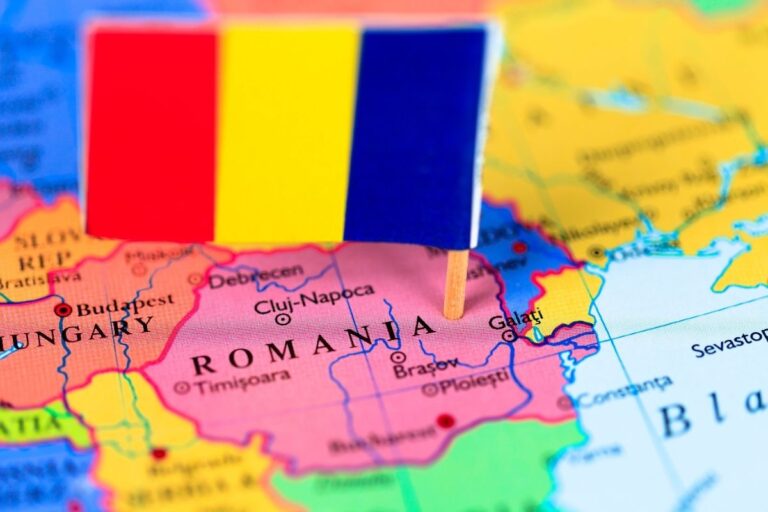
The Health Ministry reported on March 21 that 2,236 new cases of SARS-CoV-2 infection were reported in Romania in the last 24 hours, down five from the previous day, with over 18,000 RT-PCR and fast antigenic testing done.
254 of the new instances were in re-infected patients who tested positive more than 90 days after recovering from the disease the first time.
Since the previous report, the majority of newly confirmed COVID-19 cases in Romania have been recorded in Bucharest City (688), Cluj-Napoca (196), and Timis (137).
As of Monday, Romania had documented 2,818,275 cases of people infected with the new coronavirus.
Inpatient stays
In Romania, 3,042 patients with COVID-19, down 85 from the previous report, are hospitalized in specialist care centres, including 215 children.
Four hundred and fifty-five patients, down nine from the previous week, are in intensive care, including three children.
400 of the 455 patients admitted to the ICU are COVID-19 unvaccinated.
Deaths
According to the ministry another 12 Romanians infected with SARS-CoV-2 – 5 men and seven women – have died in the last 24 hours, including two before the reference time.
11 of the 12 patients who died had not been vaccinated, while one had been. The patient who had been immunized was over 60 years old. Comorbidities were seen in all immunized patients who died.
In Romania, 64,697 persons have died from SARS-CoV-2 infection since the pandemic.
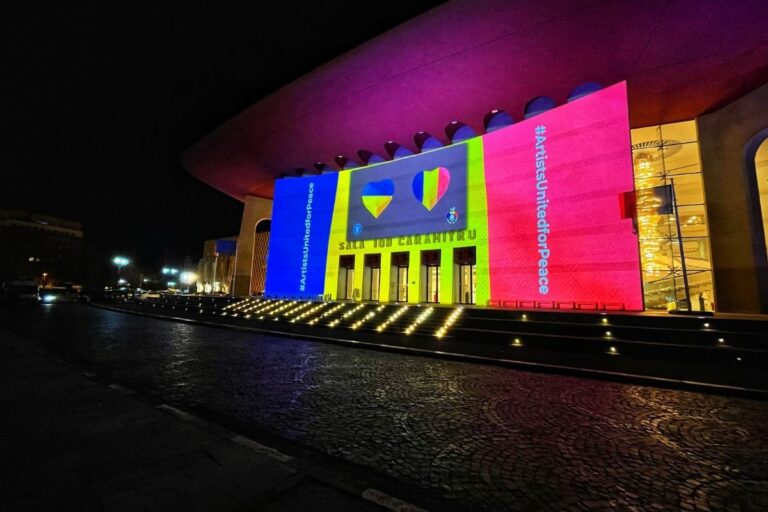
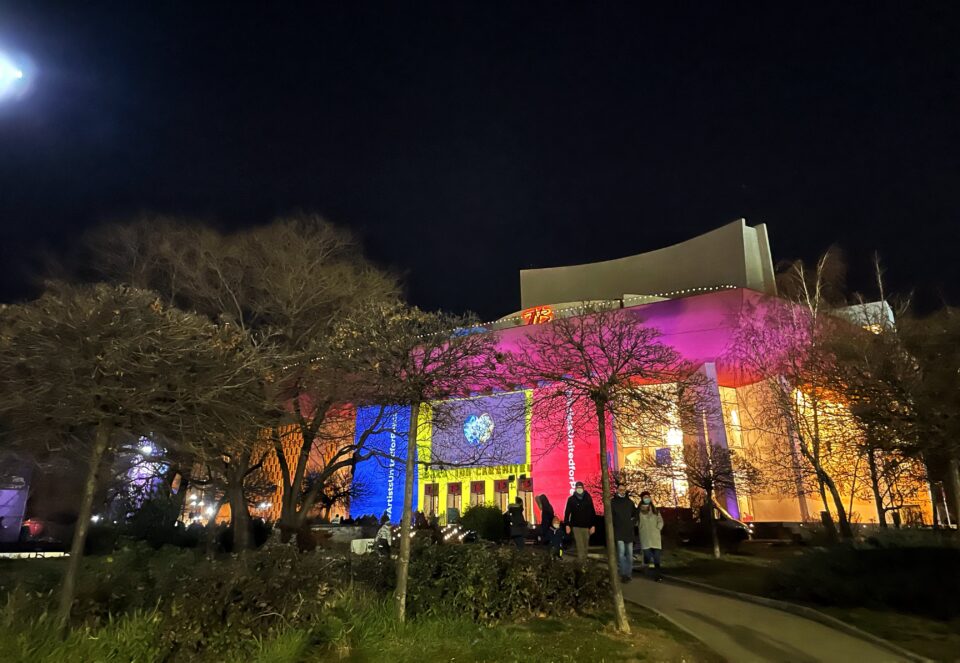
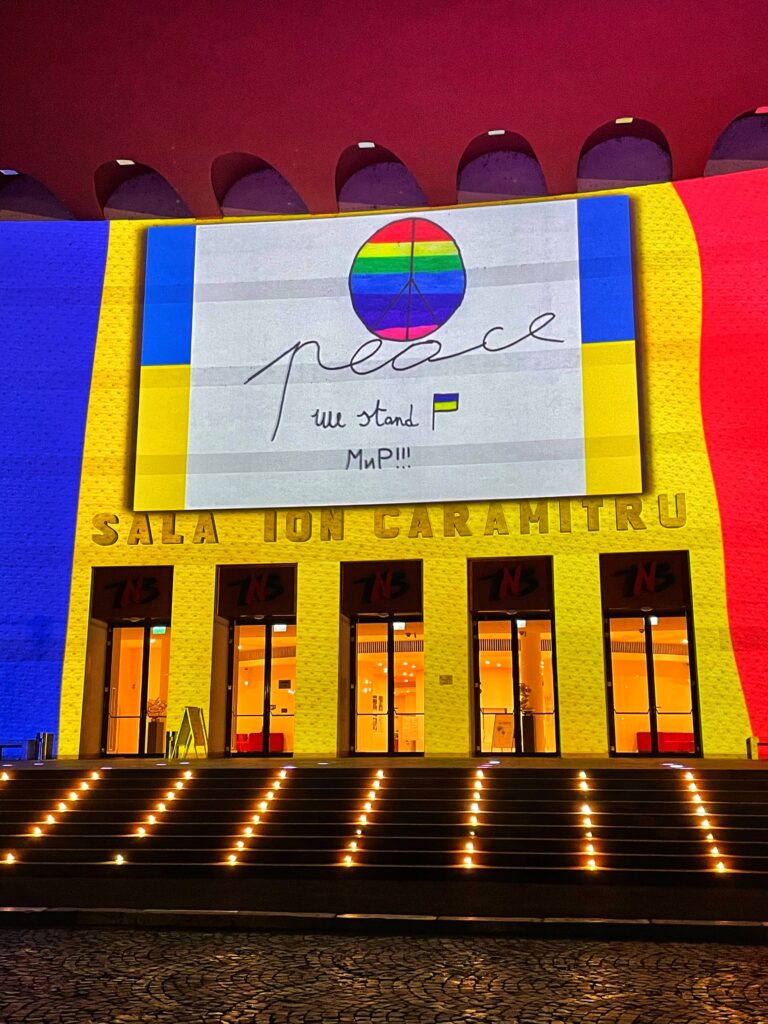
The largest New Media Art event in Romania, iMapp Bucharest, has joined the ENLIGHTENMENT SOLIDARITY PROJECT initiative – #ArtistsUnitedforPeace, projecting the international solidarity movement.
The campaign included a projection on the façade of the „Ion Luca Caragiale” National Theater – Teatrul Naţional „I. L. Caragiale” Bucureşti on Saturday, March 19th, 2022, between 20:30 and 23:00.
“Ion Luca Caragiale” National Theater
Over 35 visual artists and light festivals from around the world have donated their time and talent to the international solidarity campaign ENLIGHTENMENT, as Valahia News mentioned.
People, according to the organizers, require hope, love, encouragement, and support. We can link the entire world via art and encourage peace if we work together. Even at the worst hours of humanity’s history, art has always served the same noble purpose: to promote togetherness and to highlight the best qualities in individuals.
iMapp projection on Bucharest Theater Facade: #ArtistsUnitedforPeace
International visual artists were encouraged to develop works lasting 10-15 seconds on the theme of the project under the tagline ENLIGHTENMENT, #ArtistsUnitedforPeace. On the weekend of March 19th-20th, 2022, these works of art will be broadcast in various places throughout the world in a single movie, and the animations will highlight – through their creative energy – the combined efforts to sustain hope through a message of love, solidarity, and support. A film with drawings by children from Hungary and Italy will be included in the promotion.
The United States of America, Mexico, Costa Rica, the United Kingdom, Belgium, France, Germany, Portugal, the Czech Republic, Poland, Norway, Italy, Hungary, Australia, Japan, Canada, Thailand, and Romania are just a few of the countries where the international solidarity campaign will be projected, with over 30 cities around the world supporting the project that emphasizes the ability of art to unite and transcend time and space through the power of its healing messages.
This may be the Romanian Ministry of Defense’s motto these days: one incident after another. In March, there were two significant incidents. Two military planes collided on the same day in the first, killing eight people. Another incident occurred on Friday, March 18, when a soldier coordinating tank operations was crushed during routine procedures.
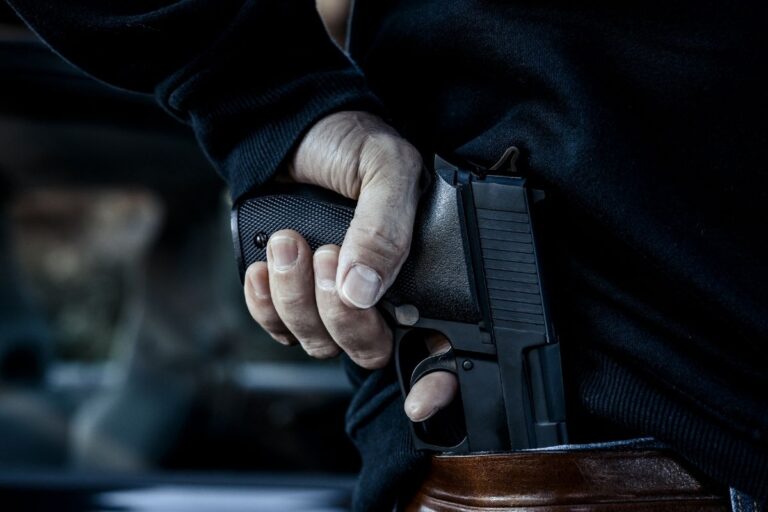
On Saturday night, another tragedy was going to unfold. In Constanta, near the Black Sea, a disguised man trespassed one military unit and took the pistol and ammo of the military defending the premises.
According to a news release from the Romanian Ministry of Defence, a soldier from the 110 Communications and Informatics Center in Mamaia Sat, Constanta county, was attacked on Saturday, March 19, while doing guard duty in the military unit. At around 8.15 p.m., an unidentified guy wearing a hood and wielding a knife broke into the army unit’s perimeter and attacked the soldier.
According to the source, the guard station soldier followed legal procedures, opposed the attacker in a face-to-face encounter, but stripped the weapon and a 30-cartridge magazine.
After controlling the weapon and ammo, the assailant departed the unit’s perimeter (jumped the fence). The assaulted soldier immediately contacted the guard corps commander and the unit commander.
The event is being investigated by the Military Prosecutor’s Office and the police.
The incident prompted the Ministry of National Defense’s leadership to issue an immediate order to improve security services, verify security plans, and defend military goals at the level of all military units.
According to Valahia News, this is the third occurrence involving Romanian military forces raises severe concerns about the Romanian soldiers’ quality of training. This occurs when the Romanian people require more excellent protection than any previous moment in history. Unfortunately, a succession of occurrences reveals that, before everything else, the army requires significant training.
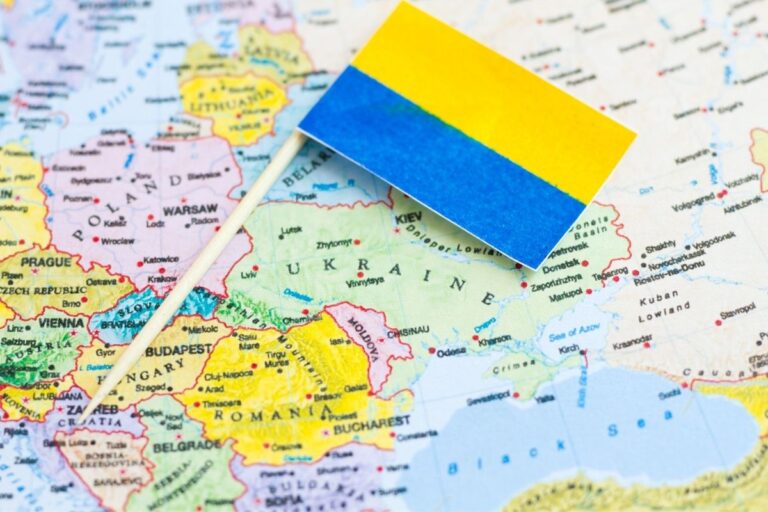
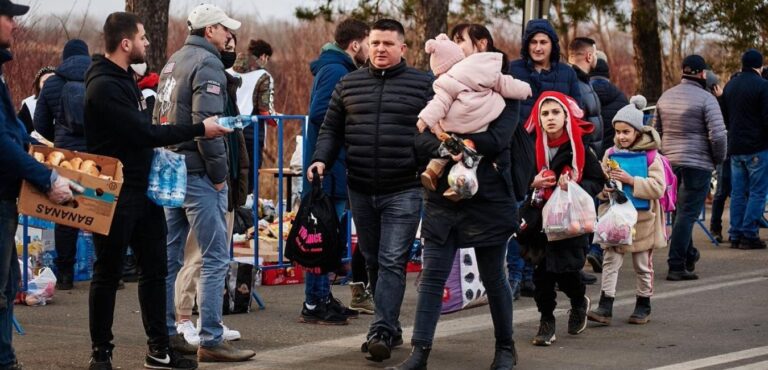
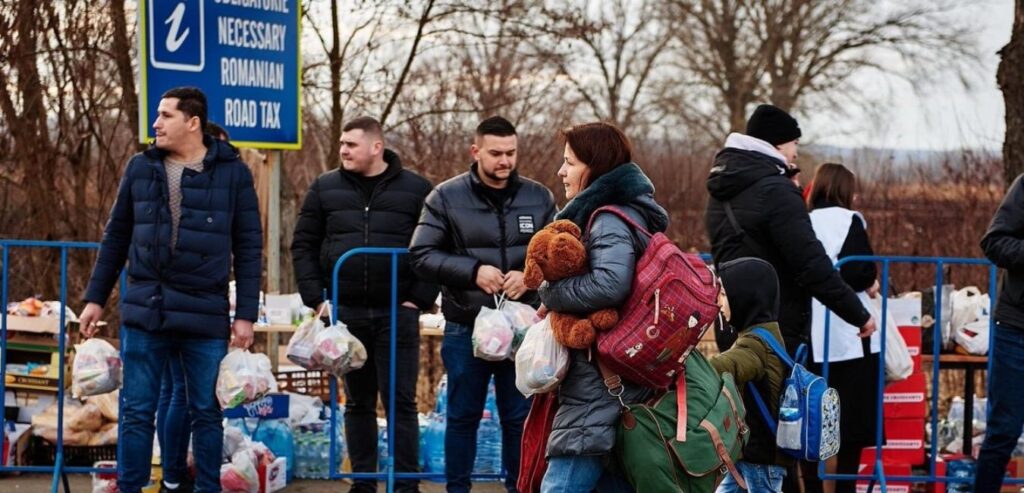
After Russia invaded Ukraine on February 24, almost 470,000 Ukrainian residents fled to Romania on March 18.
Since the crisis, 469,284 Ukrainian individuals have entered Romania, with over 85,000 remaining in the country and 3.753 seeking refuge, according to Valahia News.
In the previous 24 hours, 6,448 Ukrainian residents have entered Romania via the Ukraine border, and 5,094 have entered via the Republic of Moldova border.
On the other side, Vasile Dincu, the Romanian Defense Minister, indicated that the Romanian authorities are prepared for a more significant influx of refugees from Ukraine. Still, the Ukrainian authorities cannot process them.
We are in a state of vigilance. Apart from military training, defence resources, for the strengthening of the Eastern Flank, a new problem has appeared, that of the refugees, that we have to handle. This is a situation that directly affects us, it also affects the population in the area.
Vasile Dincu, Minister of National Defense
Because they cannot afford to migrate to other countries, many Ukrainian refugees will remain in Romania. Romania has registered 75% of Ukrainian citizens who have moved to other EU nations from Romania.
In the last inflow of Ukrainian migrants in Romania, which lasted from the start of the crisis until March 18, more than 280,000 Ukrainians crossed the Romanian border.
Significant efforts have been made at the land border to increase control and surveillance, with additional crews carrying out operations in areas of responsibility. Management is carried out in coordination with other institutions responsible for this field to ensure an efficient exchange of data and information and the coordinated adoption of appropriate responses to any circumstances that may occur.
Romanian President Klaus Johannis stated at a press conference on March 16 that Romania would not refuse any war refugees from Ukraine, saying that helping the Ukrainians is „the least that Romania can do in this catastrophe.”
However, the Ukrainian problem is concerning, and the Russian-Ukrainian war appears to be far from over. With over 600,000 people fleeing Ukraine, the situation in Ukraine could lead to the largest refugee crisis in Europe this century.
About 425,000 Ukrainian refugees have entered Romania since the conflict between Ukraine and Russia. The Romanian Border Police have reported that on March 14, 66,345 people entered Romania, including 13,769 Ukrainian nationals (down 4.8% from the previous day) through the border crossing points.
According to the Romanian General Border Police Inspectorate (IGPF), within 24 hours on Monday, 7,181 Ukrainian nationals entered Romania at the border with Ukraine (up 8.6%), and 5,089 Ukrainian residents came in through the wall with Moldova (down 18.8%).
As of March 14 at 24:00hrs, 425,786 Ukrainian citizens entered Romania.
At present, border checking at the entrance to Romania through the border crossing points is carried out efficiently, in accordance with the provisions of the national and community legislation, with the border guards covering the checking arteries to their fullest.
Similar measures to strengthen the check and increase surveillance have also been implemented at the land border, with additional crews carrying out missions in areas of responsibility.
There is work done under an integrated system with other organisations with responsibilities in the area for an efficient exchange of data and information and for joint adoption of the necessary measures to manage cases as they emerge.
On February 4 each year, World Cancer Day increases cancer awareness and promotes cancer prevention, detection, and treatment. Oncological illnesses remain one of Romania’s most common health problems, accounting for thousands of deaths among Romanians with cancer. According to World Organization data, cancer kills at least 10 million people worldwide each year, with Romania being one of the worst-affected countries in Europe. Pollution, stress, a hectic lifestyle, and the quality of the food Romanians prepare to contribute to the thousands of new cancer cases detected each year.
In Romania, how many people die of cancer? According to the National Institute for Public Health (INSP), oncologic affections claim the lives of 60,000 Romanians each year. Around 160 calories per day. Isn’t that greater than the number of deaths caused by any other virus? We would realize the sorrow surrounding this affection if the numbers were presented daily on all TV stations, as they are currently with the new coronavirus. To put it another way, we need a February 4 every day to be conscious of it.
Unfortunately, many people died of cancer in Romania during the pandemic because they did not diagnose the disease in time or could not cure it. After all, the country’s hospitals couldn’t handle Covid-19 patients. This isn’t always the case, but we should be honest about what’s going on and why.
Romanians seek treatment in other countries. Many Romanians are choosing to treat their oncologic problems overseas because of poor medical conditions in their nation and constraints in receiving medical treatment during the Covid-19 pandemic. One of the numerous reasons Romanians seek clinics outside of Romania is that they are dissatisfied with the Romanian medical system, namely public hospitals. Furthermore, anytime a patient in Romania is diagnosed with cancer, they will immediately seek a second opinion from an oncologist. As a result, Romanians may find Austrian or Turkish clinics a good fit.
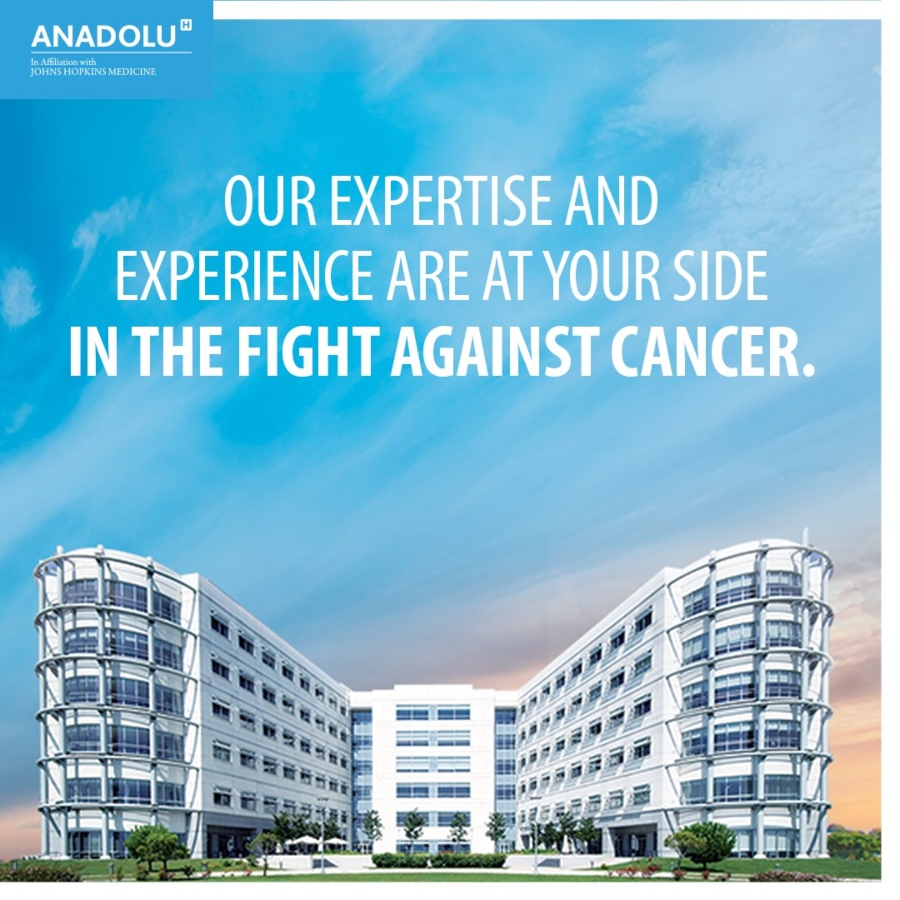
One of the clinics used by Romanians is the Anadolu Medical Center. The clinic treats patients in a sophisticated and modern way, providing medical services of international standards to enhance the quality of life. According to data from the Anadolu Medical Center, in 2020, 19% of all foreign patients were Romanians, the highest percentage of patients of foreign nationality who were treated for oncological diseases among Turks. Romanian cancer patients choose oncology clinics abroad, such as the Anadolu Medical Center in Turkey or the AKH in Austria, because of the professionalism of the doctors, the way the centres receive and treat patients, and the state-of-the-art cancer treatment technology used. Technologies like the CyberKnife M6, which enables radiation with millimetre-level precision, or the Da Vinci, the world’s most advanced robotic surgery system, are both efficient and non-invasive.
Statistical data
Statistics show that lung cancer (18%), followed by colon cancer (9.4%), liver cancer (8.3%), stomach cancer (7%) and breast cancer (6.9%). In 2020, Romanians benefited from 28% of all chemotherapy treatments performed on foreign patients at Anadolu Medical Center. This is one of the most common types of cancer in Romania. If previously 142 patients died from tumour pathology every day (Global Cancer Observatory 2018), now this number has increased. Who should be responsible for this situation? The issue of cancer mortality has been suppressed during the pandemic, but it is an issue that should raise awareness. Why should cancer patients choose another classic option? They won’t, which is why foreign oncology clinics are successful?
And, one final thought here: out of all those Romanians diagnosed with cancer, how many can afford treatment abroad? Why don’t they have medical options in the country, at the same level as they have abroad, to choose from? The very few private oncological clinics in Romania barely cope with the number of patients seeking to be cured. In this equation, the state hospitals don’t even bother to compete, as they can’t possibly offer what the private clinics do.
How long will it take the Romanian state to do something for the cancer patients and offer proper treatment in the country, in modern state hospitals, within the medical insurance they pay?
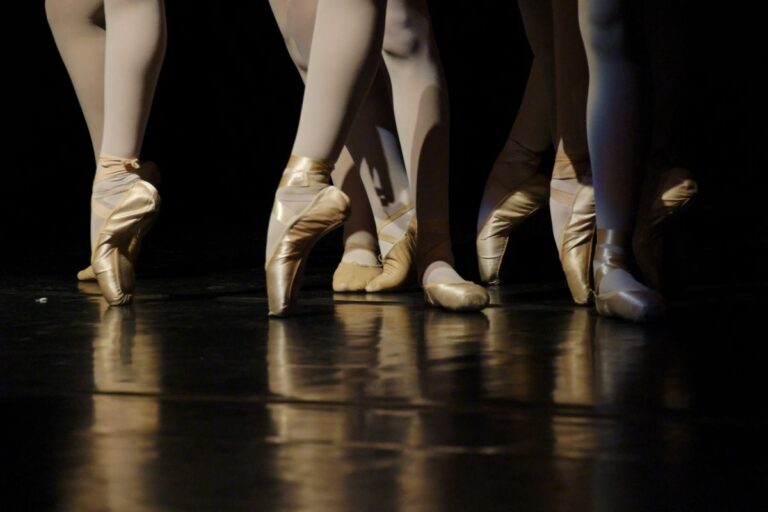
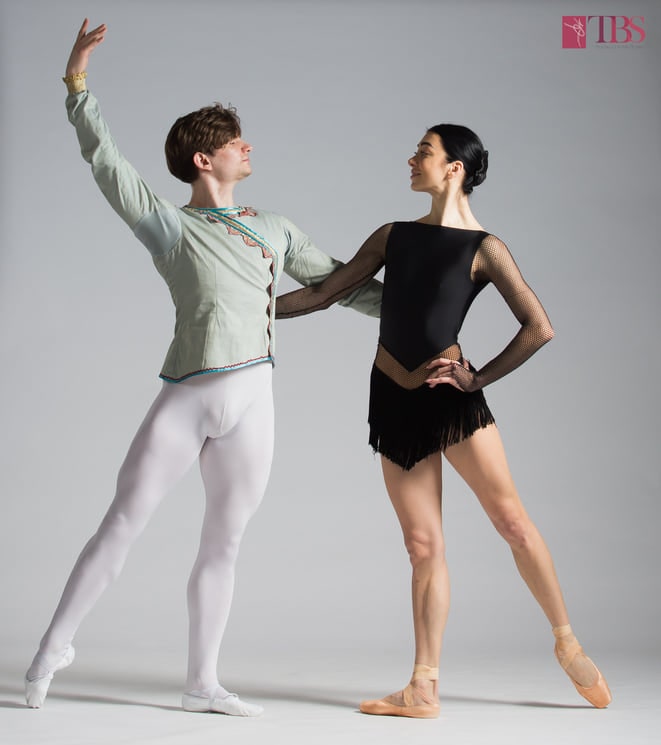
Two ballet dancers of the Odessa National Academic Opera and Ballet Theatre, Ekaterina Tomashek (soloist) and Victor Tomashek (principal), refugees at the Sibiu Ballet Theater following the conflict in Ukraine, will dance, for the first time, on March 19, during the Ballet Gala.
„We couldn’t remain indifferent to the drama that artists in Ukraine are facing in this terrible time of war, in which their country is invaded, that is why we answered without hesitation when the two dancers asked us if we can help them. Ekaterina and Victor Tomashek, which form a couple in day to day life, will dance together with the Sibiu Ballet Theater until the situation allows them to return to their country. Ahead of this tragedy that is happening in the neighbouring country, our obligation is to be united, to help when it is in our power to do so and with full faith, to hope that this terrible war will end and we will enjoy peace once more. I hope the applause on Saturday and Sunday of our audience bring to these dancers the joy and hope that we all so greatly need”, said Ovidiu Dragoman, manager at the Sibiu City Culture Hou
Source: TBS facebook page
Ekaterina Tomashek graduated from the Kazan Choreographic School with a degree in choreographic art, and after graduation was invited to dance at the Donetsk National Academic Opera and Ballet Theater. Since 2014 she was admitted to the troupe of the Odessa National Opera and Ballet Theater. She has the vast scenic experience, has participated in dance festivals and tours both in Europe (Bulgaria, France, Germany, Sweden, the Netherlands, Switzerland, etc.), as well as Asia (China). In 2016, she participated in the TV show „So You Think You Can Dance” in Ukraine.
Victor Tomashek graduated from the classes of the Kyiv Choreographic College in 2008. He has danced in the Kyiv National Theater and Opera, while later he worked for the National Theater in Donetsk, and since 2014 has been the principal of the Odessa National Academic Opera and Ballet Theatre. He participated in tours in France, Germany, Switzerland, Sweden, Bulgaria, the Netherlands, and China. He is a laureate of competitions in his home country and Russia, was a finalist on the TV show „Everybody Dance” Ukraine, in 2015. Before the start of the war in his home country, he participated in the TV show „World of Dance”.
Romania produces enough food to ward off any shortage. No Romanian is currently at risk of suffering from hunger or not finding what they need in stores, even if inevitable supply glitches are possible in this period, says the president of the Romanian Farmers Association (AFR) Daniel Botanoiu.
He explained that the decision taken by certain countries to restrict exports of agricultural and food products is understandable where certain staple foods are produced in smaller amounts than domestic consumption. Still, Romania is not in such a situation.
In his opinion, one of the most serious dangers that can arise in such situations is the one related to food overbuying, even if the daily analyses show that Romania is well stocked with agricultural and food products.
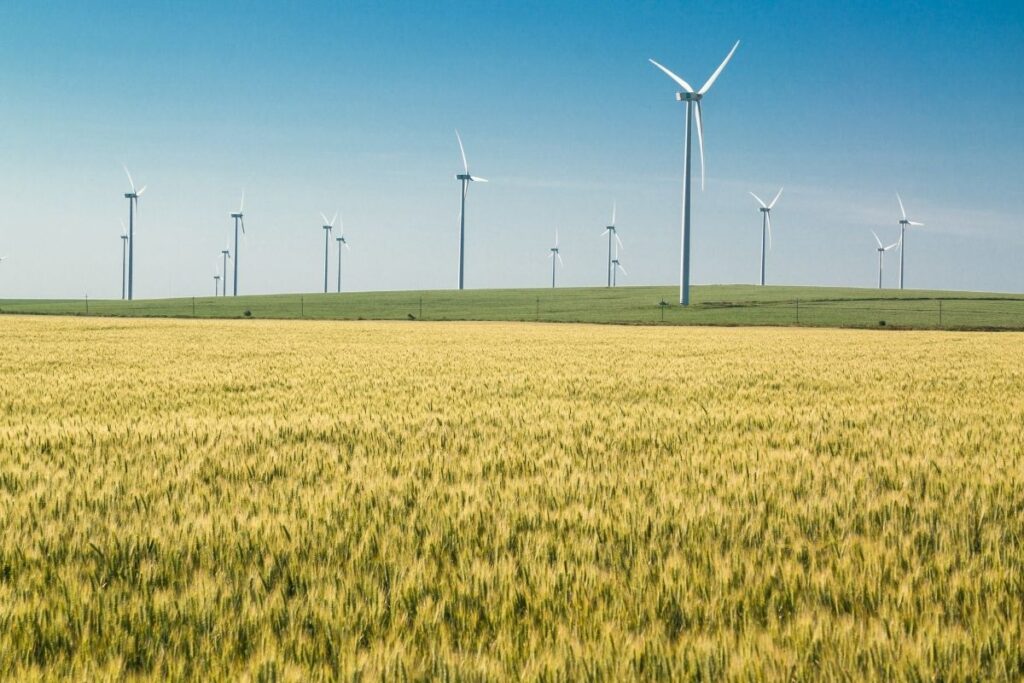
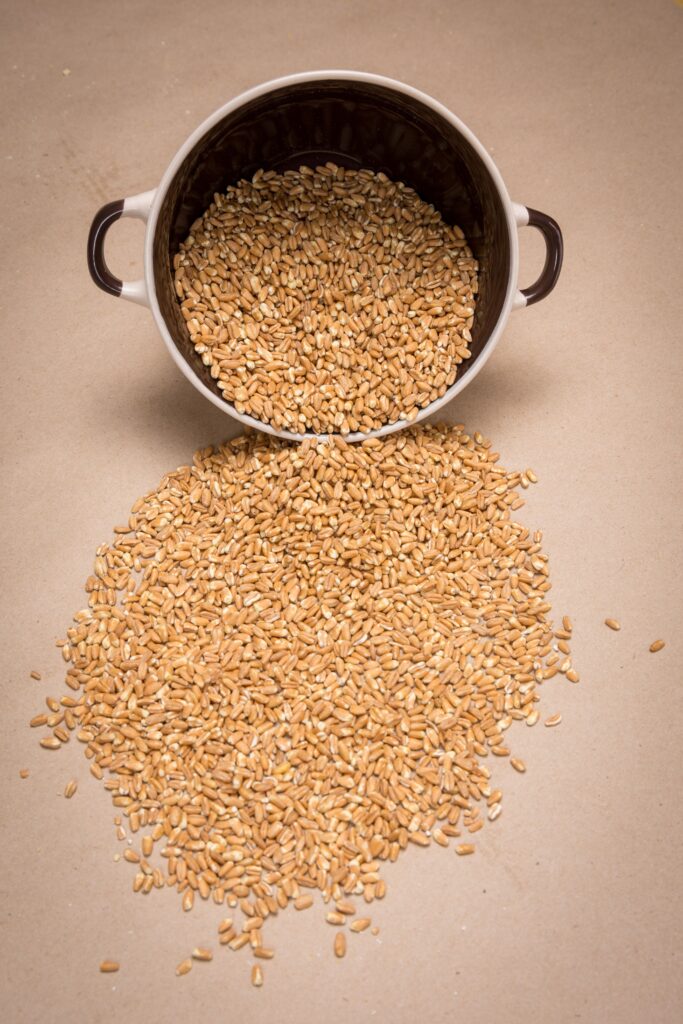
Grain fields in Romania
Regarding the stocks of cereals needed for bakery, feed or export, the representative of the farmers’ association confirmed what the authorities have also said: „There are no problems at the moment and we do not see a crisis in the near future”.
Referring to the stocks of sunflower seeds, a topic intensely discussed in recent days in the public space, Botanoiu said Romania has the most significant products in the region, at about a third of the EU’s entire output, well above the Romanians’ consumption needs.
Romania is also one of Europe’s largest producers of protein crops, but still far from its potential, which is why most of the necessary are covered from imports, just like in most European states.
In this context, the Romanian Farmers Association considers that supplementation of the national reserves cannot harm, but rather, on the contrary, it could be an additional safeguard for a longer time.
Speaking about the evolution of the price of cereals and oilseeds on the main European and world stock markets since the outbreak of the Russia-Ukraine conflict, the AFR head says that although the prices have been better for farmers, they cannot cover the cost increases with inputs, genetic material, fuels and machinery.
Corn quotations on the Chicago Board of Trade have risen by more than 10% since the beginning of the conflict in Ukraine.
Referring to how this war could affect Romanian farmers, Botanoiu said that only a few of them still have something to sell because they lack storage capacities.
Romania becomes one of the first countries where the production of modern military equipment and hardware is located, Prime Minister Nicolae Ciuca said on March 15 at the signing ceremony of a joint venture agreement between Uzina Mecanica Bucharest (UMB) and General Dynamics European Land Systems Romania (GDELS Romania) on the production of Piranha armoured personnel carriers.
”We can witness the first consolidated joint venture between Uzina Mecanica Bucharest and GD Land System and MOWAG. It is very obvious that by this we can see a high degree of trust that our strategic partners are placing in our country in a special security context and that materialises in the transfer of know-how to the Romanian industry, to the Romanian economy. I was talking to those who were directly involved in this project and they told me that it must be a moment of pride, not only for the two companies but also for us, for the fact that Romania becomes one of the first countries where the production of modern military equipment and hardware is being localised.” said the Romanian Prime Minister Nicolae Ciuca.
The prime minister pointed out that the value of the agreement is about 297 million euros, an amount of which about 55% -56% has so far been realised.
„It is the value that is specific to the first subsequent contract and (…) the development of the second subsequent contract ensues and, of course, the start of the process for the making of the other 133 carriers,” said Ciuca.
He added that UMB made important progress with its production of armoured personnel carriers that helped modernise the combat equipment of the Romanian Armed Forces.
„Before the start of this ceremony, I had the opportunity to go together with the management of the Bucharest Mechanical Plant and GDELS representatives to see what has been achieved and how the production of Piranha carriers has been integrated in Romania. The last time I was here was in 2019. On the production line there were two or three vehicles, today the line is at full capacity, and at the same time, 68 carriers have been successfully delivered since then. Two infantry battalions from Romania’s Land Forces now have modern combat equipment,” said Ciuca.
He also pointed out the importance of the contribution of other privately-owned companies operating in Romania to the completion of this project.
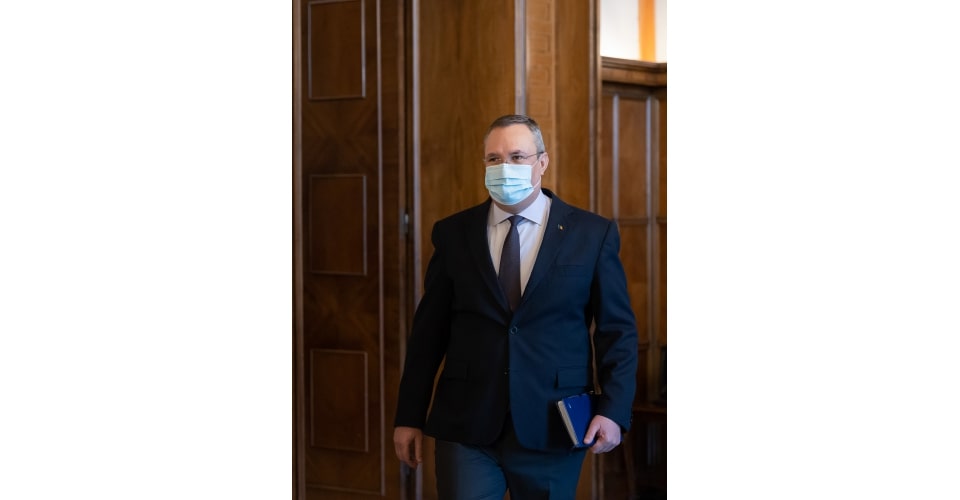
Romanian Prime Minister, Nicolae Ciuca
„I think it is very important to emphasise that along with UMB there are other privately-owned companies that actually contribute to the making of this product. We consider it important to say that Elmet has developed a facility at Magurele, where it has managed to design and produce the turret; that should be a source of joy and pride for us. At the same time, Pro Optica is a supplier of equipment for the entire carrier. And then there are CSR and Interactive that contribute to everything that means the communications parts and the integration of the information system management capacities. These are the parts that we wanted and that we see as possibly a catalyst for the revival of the Romanian defence industry,” added Ciuca.
The prime minister also sent a message to defence investors: „Romania has human resources, Romania has potential.”
„We ask each of those we spoke to understand that Romania has human resources, that Romania has potential and that Romania has a will that we must capitalise on and make fruitful so that we can align ourselves with everything that means the need for standards, as we pledged when we became members of the North Atlantic Alliance and members of the European Union and, of course, as we committed ourselves to the strategic partnerships we signed with our most important partners. Finally, I would like to thank all those who have supported and been involved in this project and assure them that the Romanian government supports and will continue to support such initiatives, which we all need,” added Ciuca.
Also attending the signing ceremony were Economy Minister Florin Spataru, and charge d’affaires of the US Embassy in Bucharest David Muniz.
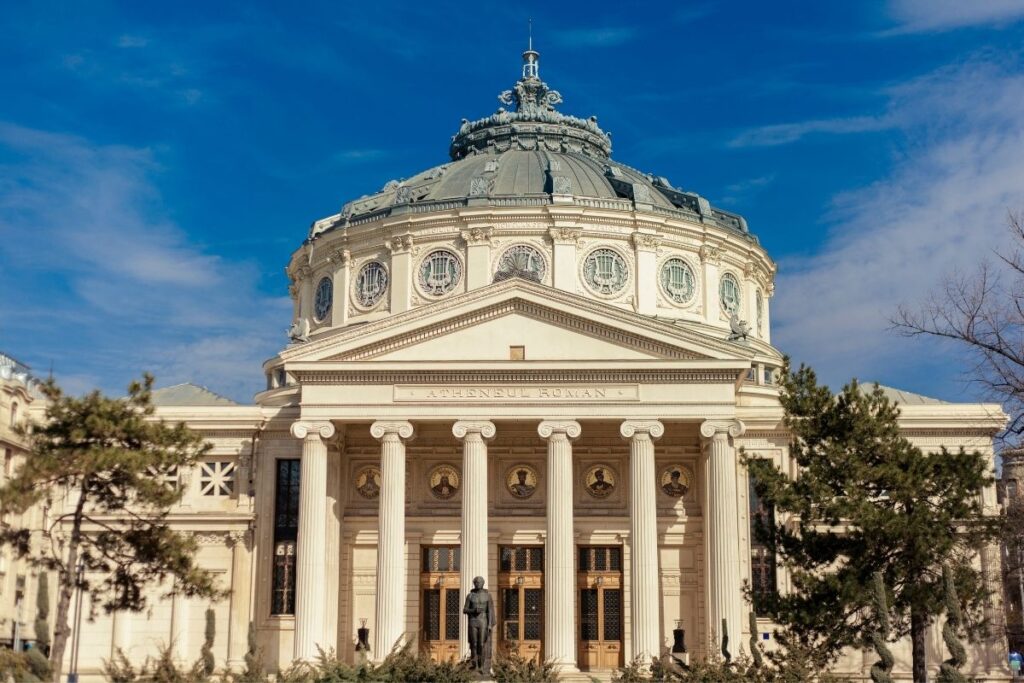
The National Museum of Romanian History, the National Museum of Contemporary Art, the National Museum of Art of Romania, the National Village Museum „Dimitrie Gusti” and the Romanian Athenaeum offer refugees from Ukraine the opportunity to visit for free the temporary collections and exhibitions they host.
Anyone who fled the war on Ukrainian territory can cross the threshold of these cultural institutions without paying a ticket or entrance fee, based on an identity card – identity card, passport, student card or driver’s license. For minors, it is recommended that they be accompanied by their parents or a close relative.
The „George Enescu” Philharmonic offers, beyond the possibility of a free visit to the Romanian Athenaeum, free access to concerts for refugees from Ukraine, within the available seats.
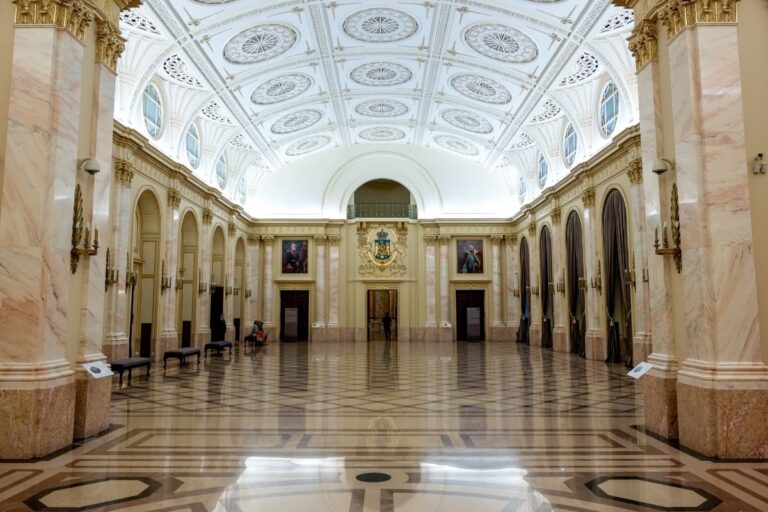
Romanian Athenaeum
The National Museum of Contemporary Art of Romania has transformed its cafe into a community space, where those affected by the war on Ukrainian territory receive internet access, hot drinks, snacks, everything is available free of charge. Visitors are welcome to contribute with what can be helpful: tea, coffee, biscuits, chocolate or snacks.
Until Friday, more than 90 refugees crossed the threshold of the National Museum of History of Romania. MNIR employees bought products that they donated to the aid centre in Calea Griviţei 200.
The „Dimitrie Gusti” National Village Museum has provided a collection space for donations for refugee reception centres. This week, they visited the Ukrainian museum at the Corbeanca refuge, and workshops were organized for their children.
The National Museum of Art of Romania announces that it offers free access to Ukrainian refugees at the headquarters and satellite museums, respectively the Museum of Art Collections, the KH Zambaccian Museum and Theodor Pallady Museum, from Wednesday to Sunday, between 10.00 and 18.00.
I went to the museum over the weekend and there were a lot of refugees visiting. With children, with families, in groups. We had already set up free access points. They will come again.