

vineri, iunie 12, 2026
Acasă Blog Pagina 17

Millions in Bitcoin pouring into Ukraine from donors

Cryptocurrency analysts say at least $13.7m (£10.2m) has so far been donated to the Ukrainian war effort through anonymous Bitcoin donations.

Researchers at Elliptic, a blockchain analysis company, said the Ukrainian government, NGOs, and volunteer groups had raised the money by advertising their Bitcoin wallet addresses online.

More than 4,000 donations have been made so far, with one unknown donor gifting Bitcoin worth $3m to an NGO.

The median donation is $95.

On Saturday afternoon, the official Twitter account of the Ukrainian government posted a message: „Stand with the people of Ukraine. Now accepting cryptocurrency donations. Bitcoin, Ethereum, and USDT.”

It posted addresses for two cryptocurrency wallets which collected $5.4m in Bitcoin, Ether, and other coins within eight hours.

The Ukrainian Digital Ministry says the latest call for donations is to „help Ukraine armed forces” but not elaborate on how the money would be spent.

Elliptic founder Tom Robinson told the BBC: „Whereas some crowdfunding and payments companies have refused to allow donations to be made to groups supporting the Ukrainian military, cryptocurrencies have emerged as a powerful alternative.”

On Friday, fundraising platform Patreon announced that it had suspended the donation page for „Come Back Alive,” a Ukrainian NGO raising money for Ukrainian forces in conflict zones since 2014. Patreon said the page violated the company’s policies, saying in a statement: „We don’t allow Patreon to be used for funding weapons or military activity.”

Cryptocurrency fundraising is becoming an increasingly prominent part of modern conflicts worldwide. Scammers also appear to be taking advantage of the current situation in Ukraine, though, by tricking unsuspecting users.

Elliptic says at least one social media post was found to copy a legitimate tweet from an NGO, but with the author swapping the Bitcoin address, presumably for one of their own.

Big Tech’s Support for Ukraine Recasts Industry’s Global Role

Big Tech has responded to Russia’s invasion of Ukraine by offering assistance to Ukrainians, stymieing Russia’s disinformation campaigns and shuttering services Moscow’s military can use on the ground, moves that make the industry a de facto participant in the hostilities.

At the request of the Ukrainian government, rocket company SpaceX activated satellite internet service in Ukraine through its Starlink system, a move that keeps the country connected to the web even as Russia attacks its websites. AirBnb has offered free housing to Ukrainians fleeing the fighting, and US phone carriers have waived fees to customers who need to call Ukraine.

Big social networks, including Facebook-owner Meta, Twitter, and Google-owned YouTube face familiar questions about dealing with disinformation and propaganda. All three have placed restrictions on Russian state-run media’s access to ad platforms and continue to fact-check posts deemed false. Microsoft and Google have limited downloads of Russian state-run media services from their app stores.

Separately, Microsoft has worked with US and Ukrainian government officials to warn of hacking threats. After consulting with the Ukrainian government, Google disabled a feature that displays traffic conditions in its widely used Maps app, a move that could potentially make navigating more difficult for the Russian military. Apple ceased sales of its products in Russia following an appeal from Kyiv, which asked the consumer electronics giant to block Russians from accessing its app store because „modern technology is perhaps the best answer to the tanks, multiple rocket launchers, and missiles.

The actions taken by the Big Tech companies indicate a changing level of involvement for corporations caught in global conflict. While the industry has always had a role in war efforts – private sector enterprises build tanks, aircraft, and weapons, and sometimes pivot to help militaries during crises – companies weren’t often involved in battlefield actions. Now businesses are actors in the conflict. 

Big Tech isn’t alone in taking action to support Ukraine and strike back at Russia. BP and Shell said they would cut ties with two gas companies controlled by the Russian government, Rosneft and Gazprom. A Norwegian asset management firm said it would divest from Russian businesses. Even the public media union that produces Eurovision banned Russia from its singing contest this year. Photo source: medium.com

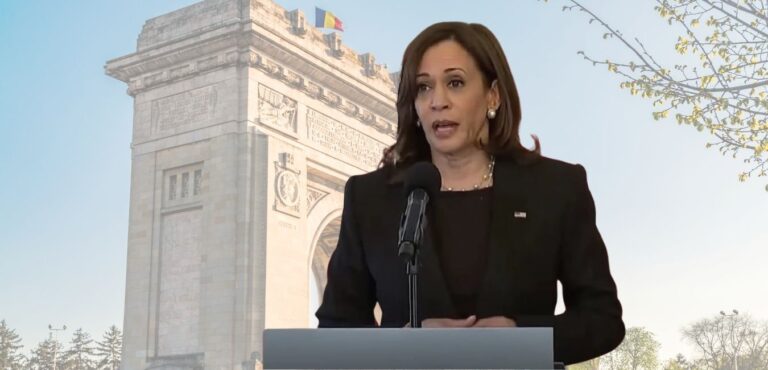
US Vice President Kamila Harris’s official visit to Romania

On March 11, American Vice President Kamala Harris will travel to Romania in response to Russia’s invasion of Ukraine. At 14:00 local time, the US representative will meet with Romanian President Klaus Johannis in Bucharest.
According to a White House press release, the US vice president’s visit to Romania aims to enhance the US-Romanian partnership in response to Russia’s aggressive and unlawful invasion.

Vice President Kamala Harris will travel to Warsaw, Poland and Bucharest, Romania on March 9-11. Her visit will demonstrate the strength and unity of the NATO alliance and US support for NATO’s East Side allies in the face of Russian aggression.

White House statement

Kamila Harrison also meets with Romanian Prime Minister Nicolae Ciuca and other European NATO leaders to talk about how to respond to Russia’s invasion of Ukraine.

US Vice President
Source: Kamila Harris Facebook Page

The security routine for the arrival of the American vice president is stringent, and residents are advised to stay away from the city center. Additionally, the police advise against travelling on DN1, Romania’s primary highway that connects Bucharest to the country’s northwestern region, on March 11 from 12:00 to 15:00 local time.

The authorities involved have in view for the instituted security measures to interfere as little as possible with the population’s daily activities. Thus, for participants in traffic, there will be measures to improve the flow of traffic and, in this context, the Bucharest Road Police Brigade requests drivers respect the signals and indications of policemen. Drivers are recommended that on Friday, in the interval between 12:00 and 17:00 hrs, they avoid travelling on National Road 1, in order to prevent the formation of traffic jams.

The Bucharest City Police General Directorate

The official statements after the visit are to be broadcast at 15.30 local time.

Photo source: Kamala Harris Facebook page